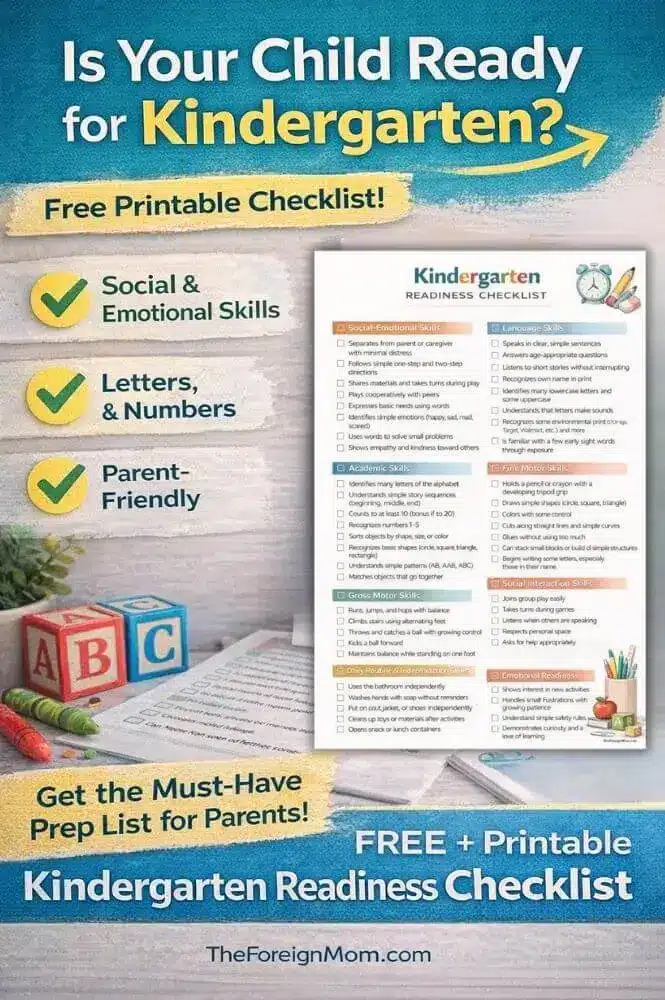
This Kindergarten Readiness Checklist covers the major areas of development: social-emotional skills, language skills, math skills, fine motor skills, gross motor skills, critical thinking, and more. It offers a clear picture of what helps young children feel confident and prepared for the kindergarten classroom. Remember, this is not a test or a requirement list. It’s a supportive tool to help your child ease into the start of kindergarten and enjoy learning at their own pace.
This post may contain affiliate links. If you make a purchase through one of these links, I may earn a small commission at no extra cost to you. This helps support my blog and allows me to continue creating helpful content. Thank you for your support.
Why I Created This Kindergarten Readiness Checklist
As a foreign-born mother, I did a lot of research before my children started kindergarten in the United States. I wanted to be sure they were truly ready and that they knew what was expected of them in a U.S. classroom.
Between school websites, teacher recommendations, and parent conversations, I quickly realized that many families share the same questions: What should my child know? What skills really matter? Are we missing something important?
That’s why I created this kindergarten readiness checklist: to bring everything together in one clear, simple place. It’s designed to help parents feel informed, confident, and prepared as they support their child’s transition into kindergarten, without pressure or comparison.
Why Kindergarten Readiness Matters
The transition from preschool to kindergarten introduces children to a more structured day, new expectations, and increased independence. While kindergarten classrooms emphasize play-based learning, teachers still look for certain core skills that help children engage, follow routines, and participate in group activities.
A well-rounded school readiness plan gives your child a smoother kindergarten transition. Whether they need extra help, more time to develop motor skills, or additional opportunities for social interaction, understanding these milestones can give parents the confidence to focus on what truly matters.
If you’re building a simple daily rhythm at home, you’ll love my list of 200 screen-free activities for kids. Perfect for strengthening attention, creativity, and independence before kindergarten.
1. Social-Emotional Skills
Among the most important predictors of kindergarten success are social-emotional skills. As young children navigate the first day of school, they will rely heavily on their ability to communicate, manage emotions, and interact with peers.
Key Points:
Follows simple directions
Can separate from parents with minimal distress
Understands basic feelings (happy, sad, mad)
Shows empathy and kindness
Plays cooperatively and takes turns
Demonstrates problem-solving during play
Uses words to solve conflicts
Social-emotional development looks different for every child. If your child struggles with these areas, offer extra attention and plenty of reassurance. Activities like role-playing, storytelling, and cooperative games are a great way to build confidence before the first day of kindergarten.
Looking for meaningful activities that build empathy and classroom kindness? Try these MLK Jr activities for kids! They’re great for conversation, social-emotional learning, and cooperative play.
2. Language Skills
Language is the foundation of communication, both spoken and written. Kindergarten teachers don’t expect perfect grammar or a huge vocabulary, but they do look for children who can express themselves clearly enough to participate in daily routines.
Your Child Should Be Able to:
Speak in clear, simple sentences
Answer basic questions
Listen during story time
Identify familiar letters of the alphabet, especially lowercase letters
Recognize their own name in environmental print
Begin to understand sight words through exposure, not mastery
Exposure to books, conversations, songs, and rhymes nurtures a love of learning and prepares your child for reading success.
3. Academic Skills
Academic readiness does not mean reading entire books or writing paragraphs. Instead, it focuses on key skills that serve as stepping stones for future learning.
Letters & Pre-Reading Skills
Recognizes most lowercase letters and some uppercase letters
Understands that print carries meaning
Can follow a story’s beginning, middle, and end
Math Skills
Counts to 10 (bonus if to 20)
Identifies basic shapes
Sorts items by color, size, or type
Understands simple patterns
Recognizes numbers 1–5 (or higher)
These essential skills help children engage during circle time, math centers, and reading practice on the first day of kindergarten.
4. Fine Motor Skills
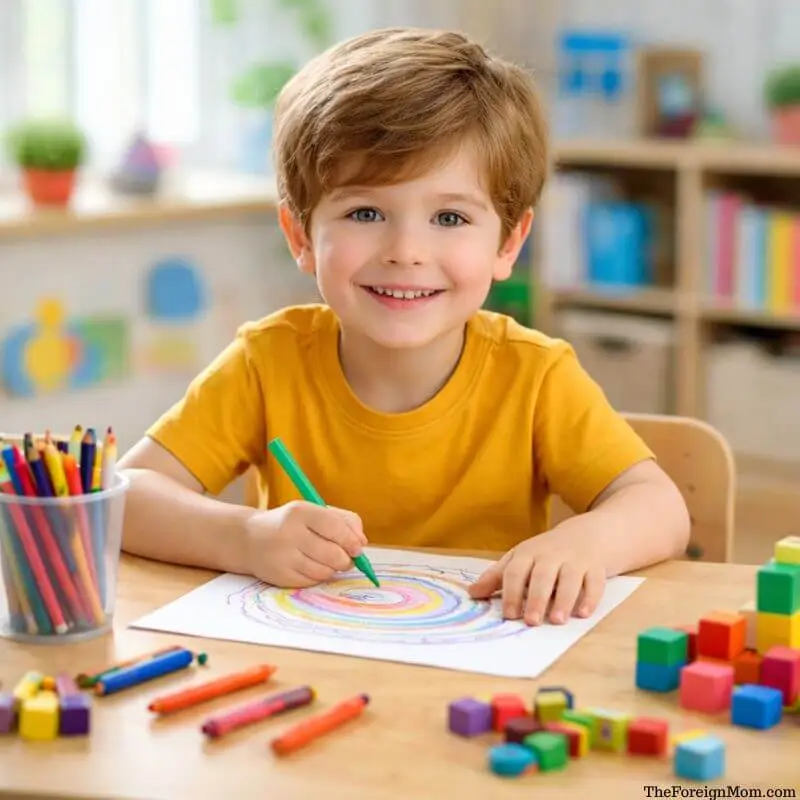
Fine motor development is a major component of kindergarten readiness. Children will spend a lot of time drawing, gluing, cutting, writing, and manipulating objects in the classroom. Strong fine motor skills support hand strength and coordination.
Before Kindergarten, Your Child Should Be Able to:
Hold a pencil with a developing tripod grip
Cut along straight lines
Use glue sticks properly
Turn pages one at a time
Build with small blocks
Draw simple shapes
Begin writing some letters of the alphabet
If your child needs extra help with hand strength, activities like Play-Doh, tweezers, lacing cards, and LEGO bricks are a great way to practice, without pressure.
The kindergarten day includes movement, playground time, physical education, and activities requiring balance and coordination. Strong gross motor skills help children participate confidently.
Helpful Physical Skills Include:
Running and stopping safely
Jumping with both feet
Walking up and down stairs
Hopping on one foot
Throwing and catching a ball
Kicking with control
Balancing on one foot
These physical skills are part of overall motor development and help young children enjoy recess, games, and active learning.
6. Daily Routine Skills
Kindergarten students follow predictable routines, and children who practice independence at home feel more secure and capable at school.
Daily Routine Skills to Practice:
Using the bathroom independently
Washing hands without reminders
Putting on shoes or a coat
Cleaning up after play
Following two-step directions
Opening snack containers
Managing their backpack
Children who feel confident in their ability to handle small tasks transition more easily into the kindergarten schedule.
7. Social Interaction & Play Skills
The kindergarten classroom is a busy environment. Students engage in group activities, centers, partner work, and whole-class discussions. Strong social interaction skills help children form friendships and cooperate with classmates.
Your Child Should Be Able to:
Join group play
Share materials without conflict
Take turns with peers
Ask for help when needed
Understand classroom boundaries
Participate in simple group games
Children learn through play, so encourage activities where your child plays with others, negotiates roles, solves problems, and uses imagination.
8. Critical Thinking & Problem Solving
Even at this young age, kids use critical thinking and problem-solving to understand the world. Kindergarten teachers love seeing children who can think through challenges, even in small ways.
Examples of Early Critical Thinking Skills:
Trying again after a mistake
Figuring out how a toy works
Asking questions
Predicting what might happen next in a story
Building structures creatively
Sorting and classifying objects
These skills grow naturally through exploration and curiosity.
9. Kindergarten Transition Programs
Many schools across the United States offer kindergarten transition programs to ease children into the world of kindergarten. These programs help children become familiar with the classroom, teacher expectations, and school routines.
Transition programs may include:
Meet-the-teacher days
Classroom tours
Practice routines (lining up, morning work, centers)
Parent workshops
Parent handouts or readiness packets
These programs can be a great way to reduce anxiety for both children and parents before the first day of school.
10. A Complete Kindergarten Readiness Checklist
This simplified list helps you quickly understand your child’s readiness:
This kindergarten checklist is not about perfection. It’s about supporting children’s development and celebrating the small steps that lead to a confident start.
Kindergarten mornings feel so much easier with simple home systems in place. Here’s how I get organized in life so routines stay calm and predictable.
FREE Kindergarten Readiness Checklist
My free kindergarten readiness checklist is a simple guide designed to support your child’s development as they prepare for this special day. It focuses on the first things that matter most in a child’s life, including social skills, emotional growth, language development, and motor skills commonly expected across school districts.
This easy-to-use checklist helps parents and caregivers track progress, spot areas that may need extra support, and feel confident guiding their child toward a smooth and successful start to school.
Final Thoughts: Every Child Grows at Their Own Pace
The child’s readiness for kindergarten is not measured by how quickly they read, write, or solve math problems. Children grow at different rates, and readiness is about feeling secure, confident, and curious. The most important thing you can do is encourage a love of learning, offer extra attention in areas where your child needs practice, and enjoy this transitional season.
With patience, support, and the right opportunities, your child will be more than ready for this exciting new chapter in the kindergarten classroom.
Let’s Stay in Touch 💛
Love easy kids activities, printables, and real-life mom hacks that actually work? Follow along on Pinterest for daily inspiration you can save for later. I share screen-free play ideas, seasonal activities, preschool printables, and family-friendly tips, all in one place, so planning feels easier (and more fun).