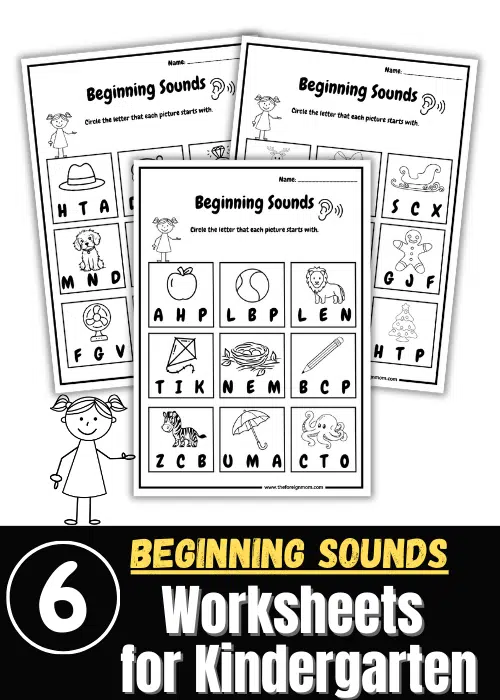
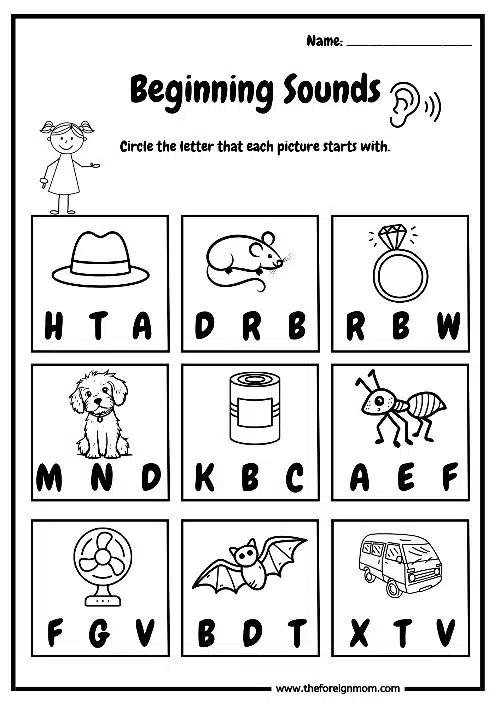
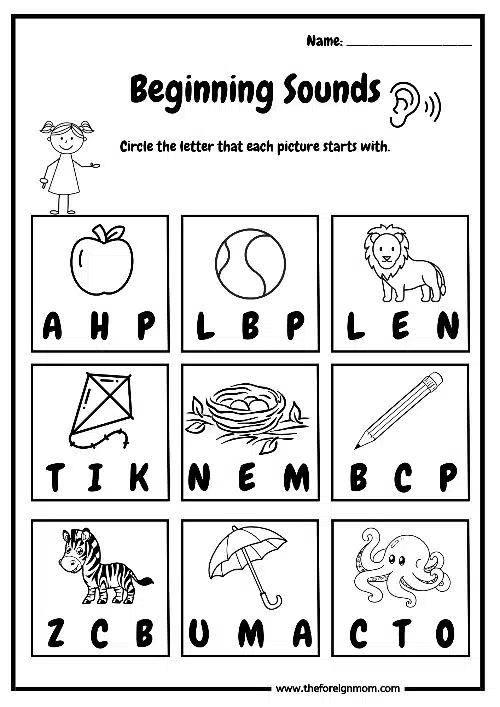
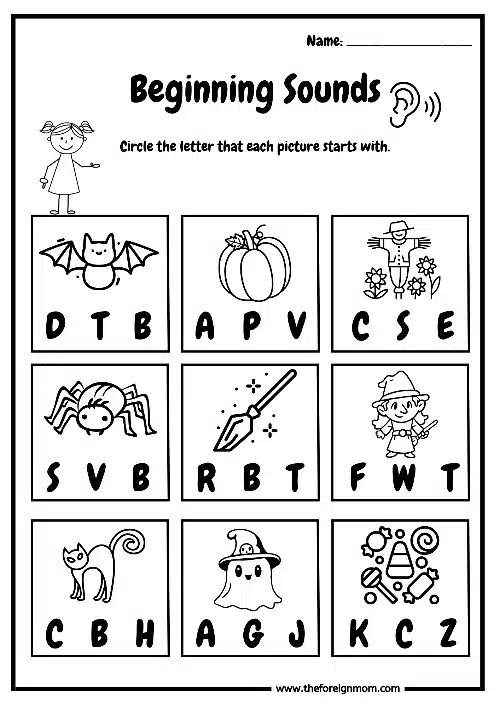
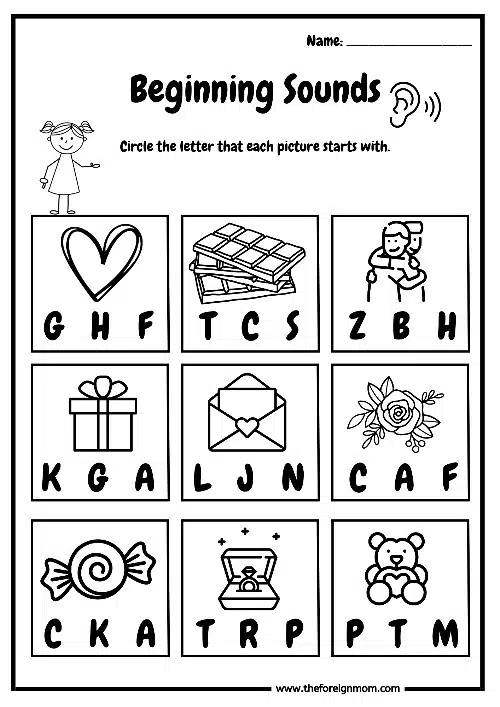
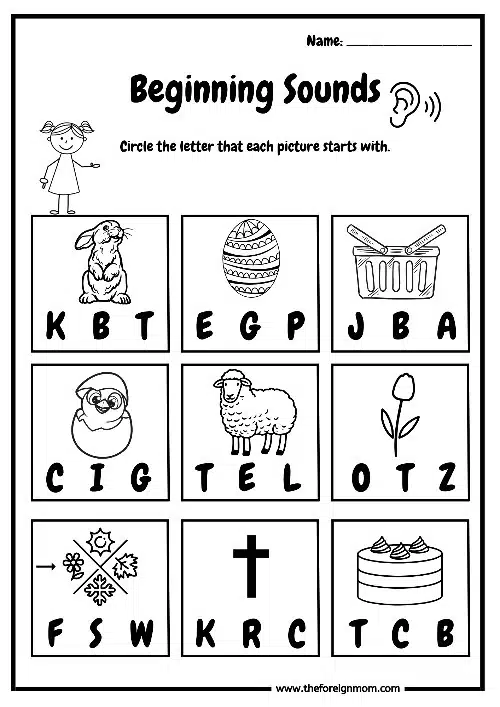
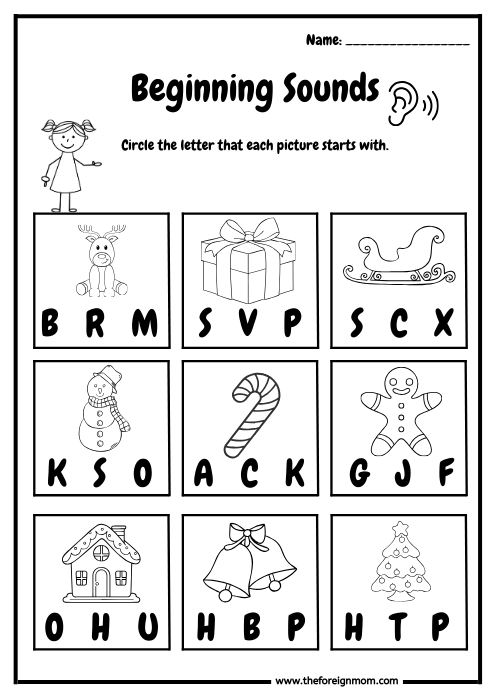
Welcome to my free beginning sounds worksheets PDF collection! My worksheets offer a fun and engaging way for children to develop their phonics skills. With colorful and interactive pages, my worksheets are perfect for kindergarteners to learn the basics of phonics and reading.
My worksheets provide a comprehensive approach to phonetic education. Moreover, my worksheets are printable and easy to access, making them convenient to use for both in-class and at-home learning. I invite you to explore our collection and download your free PDF copies today!
This site may contain affiliate links to products. I may receive a small commission (at no extra cost to you) for purchases made through these links. This helps me to pay for my website hosting and other blog-related expenses. Thank you for supporting this blog.
Table of Contents
6 FREE Beginning Sounds Worksheets PDF:
Are you looking for an exciting learning resource for your little ones? Look no further than our Beginner Sound Worksheet, an excellent tool for kindergarteners seeking to develop their phonemic awareness skills. This engaging resource allows children to explore the wonderful world of sounds and build their skills in a fun, interactive way.
My worksheets are designed with children in mind and provide plenty of opportunities for them to learn and grow. Through interactive exercises and activities, children will learn how sounds are made, how they relate to the written word, and how to identify and distinguish between sounds.
Whether you’re a parent or teacher, my worksheets are an excellent resource for helping your kids get a head start on their education. Give your child the gift of learning today and watch them grow into confident, successful learners!
Beginning sounds, also known as initial sounds, are the sounds that are at the beginning of words. They are the first phonemes, or individual speech sounds, that are pronounced when you say a word.
Understanding and recognizing beginning sounds is a fundamental concept in phonics, which is the relationship between sounds and written letters.
It is an essential skill for early readers and writers. Working on beginning sounds at home is a wonderful way to set your children up for a successful year in Kindergarten.
My FREE beginning sounds worksheets -pdf above will help your children succeed in Kindergarten.
For example, in the word “cat,” the beginning sound is the /k/ sound. In “dog,” the beginning sound is the /d/ sound.
Identifying these beginning sounds is a crucial step in phonemic awareness, which is the ability to hear, identify, and manipulate individual sounds in spoken language.
It’s an important skill for young children as they learn to read and write, as it helps them decode words and understand the connections between letters and sounds.
The Sounds of The Letters in The Alphabet:
The sounds that the letters of the alphabet make can vary depending on the language and the context.
In English, the relationship between letters and sounds is not always straightforward due to the many exceptions and variations.
Here are the typical sounds associated with the letters of the English alphabet:
The Beginning Sounds of The Alphabet:
Please start by teaching your children the beginning sounds of the alphabet.
Don’t forget to check out my FREE beginning sounds worksheets -pdf above:
A: It can make several sounds. The short sound, as in “cat,” is /æ/. The long sound, as in “cake,” is /eɪ/.
B: The sound is /b/, as in “bat.”
C: It can make the /k/ sound, as in “cat,” or the /s/ sound, as in “ceiling.”
D: The sound is /d/, as in “dog.”
E: It can make several sounds. The short sound, as in “bed,” is /ɛ/. The long sound, as in “bee,” is /iː/.
F: The sound is /f/, as in “fish.”
G: It can make the /g/ sound, as in “go,” or the /dʒ/ sound, as in “giant.”
H: The sound is /h/, as in “hat.”
I: The short sound, as in “sit,” is /ɪ/. The long sound, as in “bike,” is /aɪ/.
J: The sound is /dʒ/, as in “jump.”
K: The sound is /k/, as in “kite.”
L: The sound is /l/, as in “lion.”
M: The sound is /m/, as in “mouse.”
N: The sound is /n/, as in “nut.”
O: The short sound, as in “hot,” is /ɒ/. The long sound, as in “go,” is /oʊ/.
P: The sound is /p/, as in “pen.”
Q: In English, it’s almost always followed by a ‘u’ and makes the /kw/ sound, as in “queen.”
R: The sound is /r/, as in “rain.”
S: The sound is /s/, as in “sun.”
T: The sound is /t/, as in “top.”
U: The short sound, as in “cup,” is /ʌ/. The long sound, as in “music,” is /juː/.
V: The sound is /v/, as in “van.”
W: The sound is /w/, as in “wonder.”
X: It often represents the /ks/ sound, as in “box.”
Y: The sound can vary. It can be a consonant sound, as in “yes” (/j/), or a vowel sound, as in “myth” (/ɪ/).
Z: The sound is /z/, as in “zebra.”
It’s important to note that English has many exceptions and irregularities, and the sounds letters make can change depending on their position in a word and the words they are part of.
Additionally, English borrows words from other languages, which can introduce new sound patterns.
Please feel free to print my FREE beginning sounds worksheets pdf above:
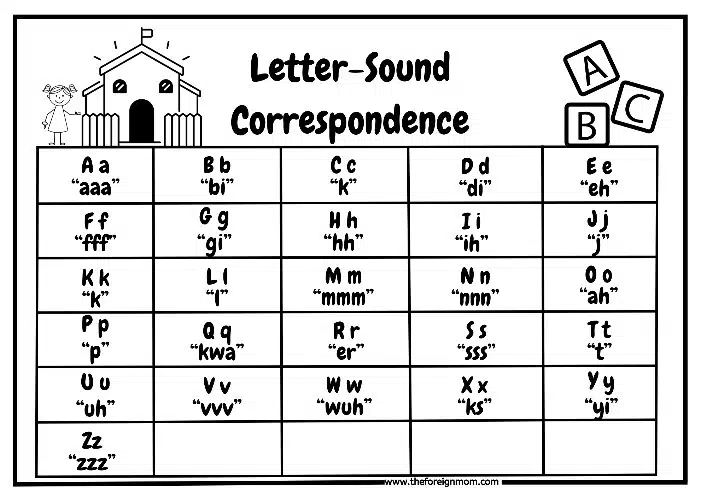
Letter Sounds Correspondence Chart For Kindergartners:
A letter-sound correspondence chart is a visual representation or reference tool that shows the relationship between letters of the alphabet and the sounds they commonly represent in a given language.
These charts are often used in early literacy education to help students learn and practice the connections between letters and their associated sounds, which is a fundamental skill in reading and phonics.
FREE Letter Correspondence Chart:
To practice the sounds of the letters of the alphabet I created a FREE letter sound correspondence chart for you below. This chart is a wonderful learning tool in addition to my FREE Beginner Sounds Worksheets PDF’s.
Follow me on social media! I regularly share exciting content and exclusive products. My platform is the perfect place to stay connected with me and interact with other supporters and access behind-the-scenes content.
Whether you prefer Facebook, Instagram, or Pinterest, I have an active presence on all major social media platforms. By following me, you’ll be the first to know about new content and exciting offers that I have in store.
So, what are you waiting for? Join my community today and stay in the loop! @theforeignmom.