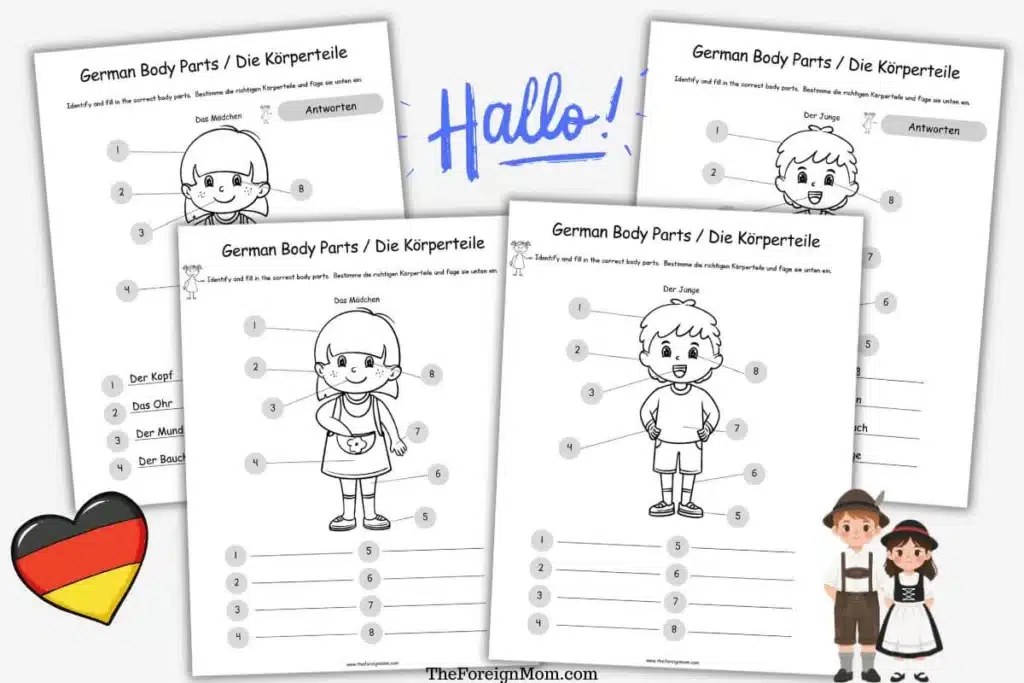
These German Body Parts Worksheets For Kids | Die Körperteile were created to help children learn useful German language vocabulary in a way that feels approachable and not overwhelming. If you are a homeschool mom, a parent teaching German little by little, or a German teacher looking for an easy beginner activity, this printable can help you get started.
If you are teaching your child German at home, body parts are one of the best places to begin. This topic is familiar, easy to act out, and genuinely fun for kids. They can point to their head, touch their nose, wiggle their toes, and say the words out loud as they go. That kind of hands-on practice makes new vocabulary feel much more natural and turns early language learning into something your child can actually enjoy.
Updated: 03/30/2026
This is a free printable worksheet set designed mainly for younger learners, especially in the early years, kindergarten primary, and 1st grade stage, but it can also work well for older beginners in high school or even 9th grade German if they need a gentle introduction or review. It includes a boy version, a girl version, and answer pages, so you can choose the page that works best for your child and have an easy reference while you teach.
If your child is just beginning with German, this can be a lovely first step. And if you are already using some of my other beginner resources, this pairs nicely with my German Alphabet Worksheets For Kids and Free German Colour Worksheet For Kids. Both are wonderful follow-ups if you want to keep building confidence little by little.
Affiliate Link Disclosure
This site may contain affiliate links to products. We may receive a small commission (at no extra cost to you) for purchases made through these links. This helps us to pay for our website hosting and other blog-related expenses. Thank you for supporting this blog.
Why Body Parts Are a Great First German Topic
When children are introduced to foreign languages, it helps to start with words they can see and use right away. The parts of the body are perfect for that. Kids already know what a head, mouth, leg, and ear are in English, so they are not learning a brand-new concept. They are simply connecting a new word to something familiar.
That makes this a great place to begin.
It also gives you the chance to use short phrases in context. Instead of only memorizing one word at a time, your child can start hearing and saying little German sentences like:
Ich habe zwei Hände.
Ist das dein Kopf?
Ist das der Mund?
That is often when things start to click. A child is no longer just repeating vocabulary. They are beginning to use it, and that is such an important part of a real language-learning journey.
Another reason I like this topic so much is that it works for a wide range of ages. It is especially helpful for preschoolers, kindergarteners, and early elementary learners. However, it can also be used with students in elementary, middle, and secondary settings who are still learning beginner-level vocabulary. Because the topic is so visual, it feels much less intimidating than abstract vocabulary lists full of different words.
Who These Worksheets Are Best For
This resource is mainly for parents, homeschool families, and teachers working with younger children. It is a good fit for:
preschool and kindergarten learners
early elementary children
homeschool families
beginner German lessons at home
quiet seatwork or partner practice
A German teacher planning review activities
older beginners who need a refresher
students doing independent work
I would especially recommend it for children who are just starting their German journey and need something visual and manageable.
What Is Included in the Free Printable Set?
This free set includes:
one boy body parts worksheet
one girl body parts worksheet
answer pages
beginner vocabulary practice
room to match words with meaning
clear printable pages in PDF file format
The two worksheet versions give you a little flexibility. Some children enjoy working with a page that feels more relatable to them, and sometimes just having a choice makes an activity more inviting.
Each worksheet focuses on labeling the whole body, identifying common human body parts, and helping children become familiar with everyday words they can actually use. The page layout is intentionally straightforward, so children can concentrate on the vocabulary without getting distracted by extra clutter.
The file is easy to print and use right away. You can print it in black and white on regular paper, which is what I recommend for most home use. If you want to reuse it, you could also laminate it or place it in a dry-erase sleeve.
This worksheet set introduces some of the most common beginner words for body parts. A few examples include:
der Kopf – head
der Körper – body
die Körperteile – body parts
das Bein – leg
der Mund – mouth
das Ohr – ear
der Finger – finger
der Fuß – foot
These are helpful words to begin with because children can practice them right away. They can point to the parts of the face, identify common facial features, and start noticing how the German translation connects to the English words they already know.
If your child is ready, you can also mention the plural form from time to time. I would keep that light in the beginning, especially for younger kids, but it can still be helpful to point out that one word may change when you are talking about more than one.
You can also compare the German words to their English meaning, which often makes the lesson feel less intimidating. That side-by-side comparison is one reason this kind of activity fits so nicely alongside English language arts in the homeschool day.
A Pronunciation Tip for Parents
If German is not your first language, do not let that stop you. You really do not need to pronounce everything perfectly to begin. The most important thing is giving your child exposure and making the lesson enjoyable.
Here are a few rough beginner-friendly pronunciation tips:
der Kopf sounds a bit like “dare kopf”
der Mund sounds close to “dare moont”
das Ohr sounds similar to “das or”
der Fuß sounds a bit like “dare foos”
These are not perfect phonetic spellings, but they can help you feel more comfortable getting started. As you continue, you can always improve your pronunciation little by little.
How to Use These Worksheets at Home
One of the things I like most about this printable is that it does not require much prep. You can fit it into a normal day without turning it into a huge project.
Here are a few easy teaching methods that work well:
1. Introduce the words first
Before handing over the worksheet, say each body part out loud and have your child point to it on their own body.
2. Complete the worksheet together
For the first round, work side by side. Read the number, point to the body part, and help your child write the German word.
3. Use it as a review later
Once your child is familiar with the words, print the worksheet again and let them try it more independently.
4. Add movement
After every few words, have your child stand up and touch the body part you say in German.
5. Turn it into a quick game
Ask simple questions like, Ist das der Kopf? or Ist das der Mund? and let your child answer yes or no.
This kind of review is a fun way to practice without making the lesson feel too formal.
If you want to make it even more hands-on, you can use homemade labels, toy figures, or even lollipop sticks with the vocabulary written on them. That can be especially helpful for younger children who enjoy moving things around while they learn.
How Long Does It Take?
For most young children, this activity will probably take about 10 to 15 minutes if you are doing it together for the first time.
If you add movement, songs, or extra review, it could stretch to 20 minutes, which is still very manageable for young learners. That is another reason I like using a topic like this. You can keep the lesson short, successful, and easy to repeat.
How Often Should You Review It?
You do not need to do everything in one day. In fact, it is usually better not to.
You could introduce a few words on day one, finish the worksheet on day two, and review with pointing games later in the week. Even just a few minutes of review here and there can make a big difference.
If your child enjoys repetition, you can revisit the same worksheet after a few days and see what they remember. That is often a great confidence booster.
Why Visual Practice Helps So Much
Young children learn especially well when they can see what they are learning. A worksheet like this gives them a visual anchor. They can look at the picture, hear the word, repeat it, and write it down.
That kind of multi-step practice is one reason printables can be so effective.
This is also why body parts are such a beginner-friendly topic. Unlike abstract vocabulary, children can immediately connect the word to something real. They are not guessing what the word means. They can see it, touch it, and use it.
At first glance, it may not seem like a great detail, but I like including both versions when I can.
Some children simply enjoy a worksheet more when they feel connected to the image on the page. It also gives parents and teachers a choice, which is always nice. The learning goal stays the same, but the page feels a little more personal.
It is a small touch, but for young children, those little things can make a difference.
More Ways to Extend the Lesson
Once your child has finished the worksheet, you can keep the lesson going without much extra effort.
Here are a few ideas:
Draw a person and label the body parts in German
Sort the words into parts of the face, upper body, and lower body
Practice saying one word and having your child point to it
Let your child quiz you
Use a stuffed animal or doll to review the vocabulary
Say a word and ask your child to use it in a tiny phrase
You could also pair this post with a few other beginner resources and make a small at-home German bundle.
If you want to keep going after this lesson, some natural next steps would be:
If you are teaching your child German yourself, I just want to say this: it does not have to be perfect to be valuable.
You do not need long lesson plans, fancy apps, or a complicated setup. You do not need to sound like a native speaker either.
A short activity, a few repeated words, and a positive experience are already enough to build momentum. That is one reason I enjoy creating this kind of learning material. It helps make German feel doable, even on busy days.
Final Thoughts
I hope these German Body Parts Worksheets For Kids | Die Körperteile help make early German lessons feel easier and more enjoyable in your home or classroom.
This is one of those beginner topics that works beautifully because children can use the words right away. They can see the meaning, act it out, and practice it in everyday life. That makes the lesson feel useful from the very beginning.
If you are looking for a free, approachable way to introduce body part vocabulary, this printable is a lovely place to start. It is a gentle introduction to Körperteile – Deutsch, and it fits nicely into a bigger home-based world language routine if that is something you are building over time.
And if your child enjoys this activity, be sure to explore some of the other German resources on the blog, too. Building skills little by little really does add up.
Let’s Stay in Touch
If you enjoy these German printables and want more easy learning ideas for kids, make sure to follow me on Pinterest. I share free printables, beginner German resources, homeschool-friendly activities, and family ideas you can save for later.
Pinterest is the best place to keep up with my newest worksheets and fresh ideas from The Foreign Mom, so come follow along there and stay connected.
FAQ: German Body Parts Worksheets For Kids
Are these German body parts worksheets free?
Yes, this is a free printable worksheet set for kids.
What age are these worksheets best for?
They work especially well for preschool, kindergarten, early elementary children, and older beginners in high school or 9th-grade German who need a basic review.
Do I need to know German to use these with my child?
No. Even if German is new to you, you can still use these worksheets as a starting point. Keep it light and learn alongside your child.
How long does this activity take?
Most children can complete it in about 10 to 15 minutes with help. You can always break it into shorter parts if needed.
Should I print in color?
No, black and white works perfectly well. Regular printer paper is fine for everyday use.
How often should we review body parts in German?
A few short review sessions during the week work really well. Repetition over time is more helpful than trying to do too much at once.
What should I teach after this?
Colors, the alphabet, shapes, and seasonal vocabulary are all great next steps. You can find more beginner-friendly German printables here on the blog.